COPY RIGHTS : TO AVOID COPYRIGHT VIOLATIONS, ALL POSTS ARE SHOWN ALONG WITH SOURCES FROM WHERE ITS TAKEN. PLEASE CONTACT ME IN MY EMAIL SALEEMASRAF@GMAIL.COM , IF YOU ARE THE AUTHOR AND YOUR NAME IS NOT DISPLAYED IN THE ARTICLE.THE UNINTENTIONAL LAPSE ON MY PART WILL BE IMMEDIATELY CORRECTED.

I HAVE SHARED ALL MY PRACTICAL WATER TREATMENT EXPERIENCES WITH SOLVED EXAMPLE HERE SO THAT ANYBODY CAN USE IT.

SEARCH THIS BLOG BELOW FOR ENVO ,COMPACT STP,ETP,STP,FMR,MBBR,SAFF,IRON,ARSENIC,FLUORIDE,FILTER,RO,UASB,BIO GAS,AERATION TANK,SETTLING TANK,DOSING,AMC.

SEARCH THIS BLOG

Wednesday, September 14, 2016

ISLAM--- A COMPLETE CODE OF LIFE

Subject: Ranking of true Islamic countries
*How Islamic are the Islamic Countries*
A study conducted by Prof. Hussain Askari of George Washington University entitled *“How Islamic are the Islamic Countries"* showed that most of the countries that apply *Islamic Principles* in their daily lives are not ones that are traditionally Muslim.
New Zealand ranked 1st, Luxembourg 2nd, Ireland 3rd, Iceland 4th, Finland 5th, Denmark 6th Canada 7th. Malaysia 38th, Kuwait 48th, Bahrain 64th and the surprise *Kingdom of Saudi Arabia ranked 131st*.
The study, published in the *Global Economy Journal* might be shocking to most of us but when we look around us and see the reality of the situation, we find that the results of the study are accurate and true.
As Muslims we seem to care only about performing religious Obligations/Rituals/Sunnah (prayer, fasting, niqab, beards, etc), reading the Qur’an and the Hadiths, but we don't practice what we espouse.
We listen to religious lessons and sermons more than the other people on the face of the earth, but we are still not the best of Nations. In the last 60 years, we have listened to 3,000 Friday sermons.
_*A Chinese merchant once said: “Muslim merchants come to me and ask me to put fake international labels and brands on their goods. When I invite them to eat, they refuse because the food is not Halal. So it is Halal for them to sell fake goods?”*_
_*A Japanese Muslim said: “I traveled to the West and saw Islam in practice applied in the daily life of non-Muslims. I traveled to the East, I saw Islam but did not see any Muslims. I thank Allah I knew Islam before I knew how Muslims act.”*_
Religion should not be reduced to Prayer and Fasting. It is a way of life and it is about how we treat others.
Performing a religious obligation is up to you and it is something between you and Allah. However, good ethics is something between you and other people. In other words, if we do not put Islamic ethics into action and practice, corruption will become rampant and disgrace will be our future.
We should not judge a person based on how he performs religious obligations for he might be a hypocrite.
_*The Prophet Muhammad (peace be upon him) said: “Verily, the bankrupt of my nation are those who come on the Day of Resurrection with prayers, fasting and charity, but also with insults, slander, consuming wealth, shedding and beating others.”*_
I believe *Islam* (external aspect of faith) is incomplete without *Imaan* (internal aspect of faith) and *Ihsaan* (social aspect of faith). Ponder, understand and realize this.
Lord Bernard Shaw is said to have said: *Islam is the best religion and Muslims are the worst followers.*
A statement by Nasiruddin Shah before Shariyah court in Pakistani movie ' Khuda ke liye' ,
*"Haram ki kamai jeb me dale hum halal gosht ki dukan dhundhte hai" !!!*


Tuesday, September 13, 2016

The economic impact of Eid-ul-Azha Qurbani


Source of the article:https://islamqa.info/en/36387
The word udhiyah means an animal of the ‘an’aam class (i.e., camel, cow, sheep or goat) that is slaughtered during the days of Eid al-Adha because of the Eid and as an act of worship, intending to draw closer to Allaah

“Udhiyah is  for the one who is able to do it, so a person should offer the sacrifice on behalf of himself and the members of his household.”If a man sacrifices a single sheep or goat on behalf of himself and his family, that will suffice for everyone he intended of his family, whether living or deceased. If he did not intend anything specific then it includes all those who are included in this word (family or household) either customarily or linguistically. Customarily it refers to all those whom he supports of wives, children and relatives; linguistically it includes all those who are related to him of his own children and the descendents of his father, grandfather and great-grandfather. 
One-seventh of a camel or cow is equivalent to one sheep; if a man sacrifices one-seventh of a camel or cow on behalf of himself and his family, that is sufficient, because the Prophet (peace and blessings of Allaah be upon him) said that one-seventh of a camel or cow takes the place of a sheep in the case of the hadiy (sacrifice offered during Hajj), so that applies also to the udhiyah because there is no difference between the udhiyah and the hadiy in this regard. 
Secondly: 
If two or more people buy a sheep and sacrifice it, that is not sufficient, because no such thing has been narrated in the Qur’aan and Sunnah. Similarly if eight or more people share one camel or one cow, that is not sufficient (but it is permissible for seven people to share a camel or cow), because acts of worship are as prescribed in the Qur’aan and Sunnah and are not subject to personal opinion; it is not permissible to go beyond the set limits with regard to how much is to be done or the way in which it is to be done. This does not have to do with including others in the reward, because it was narrated that there is no limit to the number of people on whose behalf the sacrifice may be offered.

Source of the article :https://www.dawn.com/news/333485 Almighty Allah made us remember Ibrahim (A.S.) story every year in Eid-ul-Azha for a reason.

Almighty Allah is not interested in anyone’s suffering, but Allah brought us here for a reason, He created us for a reason and He puts us in situations to help us learn what we were created for: The ultimate, sincere and pure belief in Allah!

The economy of Eid-ul-Azha, an Islamic festival, commemorating the sacrifice of prophet Ibrahim, seems to be the most dynamic of all other celebrations in generating business and temporary employment.

The meat is then usually split into three parts; one for the family, one for friends and neighbours, and the last one given to the needy people. almost all Muslims practice it in order to make sure that everyone can partake in the feast.

Eid al-Adha, then, is even more powerful than Eid al-Fitr in terms of its economic impact. Trillions of Rupees are channelled and redistributed among the people, and the poor people get a slice of it. In the spirit of spiritual festivity, it seems that material wealth also plays a big part in helping other people to smile.

It is the rural areas that raises sacrificial animals and receives the major chunk of the spending.
 There was a whole chain of middlemen between the original seller in remote areas and the ultimate buyer in cities.
Transporters have already been mentioned. Trucks and other smaller pick-ups work round the clock. There are caretakers of animals bought by people who are either incapable or not inclined to handle cattle by themselves.

Hide collectors, animal feed sellers, animal doctors and makeshift stalls of other paraphernalia have sprung up all over the country employing people in thousands. Normally sale of freezers rise before the Eid as many people store the meat for consumption. Salt is used for preserving raw hide.Sell of spices also picks up.
.
There are many industries that receive a direct stimulus on Eid-ul-Azha. The leading sectors are leather industry, cement industry, livestock and agriculture. Indirect benefit reaches yet other industries.
For instance, when farmers and investors in livestock sector get returns on their annual investments on Eid, they buy new automobiles, tractors, renovate houses and purchase various other items that are part of the rural economy.


“The multiplier effect of billions spent on Eid-ul-Azha is hard to quantify. It should suffice to say that beside earning blessings of God, they generate additional demand for a wide variety of goods and services”.

Monday, September 12, 2016

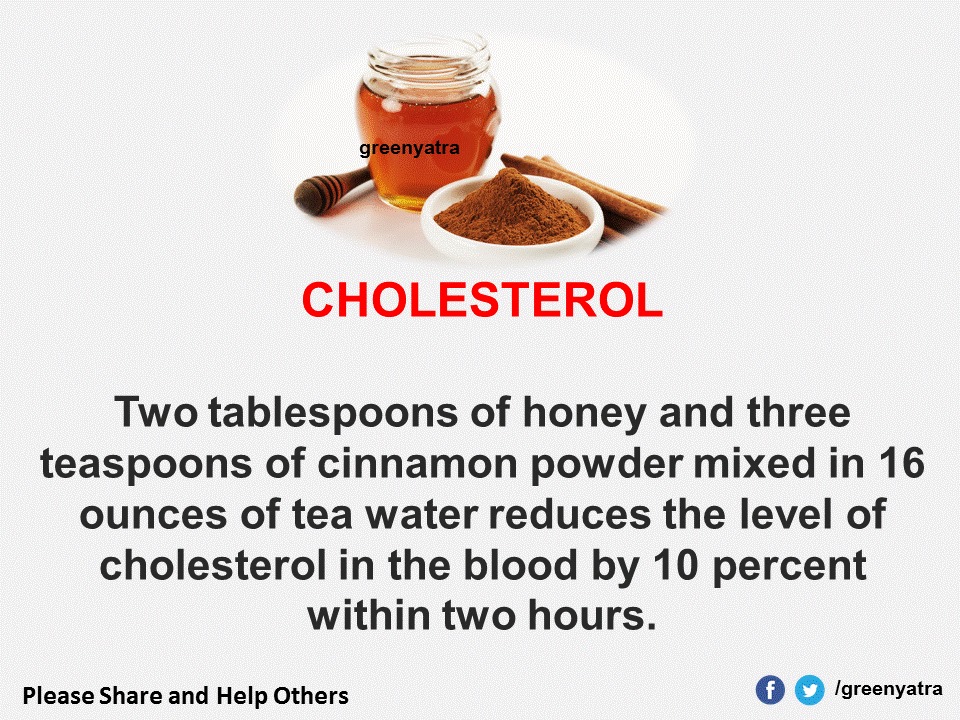
Honey and Cinnamon Mou Jul aru dalchini health benifits

Source of the artcle: https://www.facebook.com/greenyatra/


Saturday, September 10, 2016

The Qur’an and Hijab, khimar, jilbab ,niqab, chador, burqa

NOTE FROM COMPILER:

Hidayah (Arabic: هداية‎‎, Hidāyah) is an Arabic word meaning "guidance". According to Islamic belief, guidance has been provided by Allah to humans primarily in the form of the Qur'an. May Allah gives us all hidayah. Ameen. It is our obligatory duty to spread the quranic knowledge as ordered by our beloved Prophet (Peace Be upon Him).This post is made with this intention. All sources of information are shown so that the reader can go and read more from the actual source. Not a single word is that of the compiler.


Islam cannot be properly followed without knowledge. It is a rational law and to follow it rightly one needs to exercise reason and understanding at every step.


The requirement of hijab is a Qur’anic command. The basic requirement is that a Muslim woman should cover her head and bosom with a khimar (a head covering), and her body with a jilbab (a loose over-garment so that you cant see the contour of her body). Of course, she can leave her face and hands open


The Qur’an and Hijab


Islam has strongly emphasized the concept of decency and modesty in the interaction between members of the opposite sex. Dress code is part of that overall teaching. There are two verses in the Qur’an in which Almighty Allah talks about the issue of decency and hijab as defined earlier.

The First Verse

In Chapter 24 known as an-Nur (the Light), in verse 30, Allah commands Prophet Muhammad as follows:
قُلْ لِلْمُؤْمِنِيْنَ يَغُضُّوْا مِنْ أَبْصَارِهِمْ وَ يَحْفَظُوْا فُرُوْجَهُمْ, ذَلِكَ أَزْكَى لَهُمْ.
Say to the believing men that: they should cast down their glances and guard their private parts (by being chaste). This is better for them.”
This is a command to Muslim men that they should not lustfully look at women (other than their own wives); and in order to prevent any possibility of temptation, they are required to cast their glances downwards. This is known as “hijab of the eyes”.
Then in the next verse, Allah commands the Prophet to address thewomen:
قُلْ لِلْمُؤْمِنَاتِ يَغْضُضْنَ مِنْ أَبْصَارِهِنَّ وَ يَحْفَظْنَ فُرُوْجَهُنَّ...
“Say to the believing women that: they should cast down their glances and guard their private parts (by being chaste)…”
This is a similar command as given to the men in the previous verse regarding “hijab of the eyes”.
This hijab of eyes is similar to the teaching of Jesus where he says, “You have heard that it was said by them of old time, you shall not commit adultery. But I say unto you, That whosoever looks on a woman to lust after her has committed adultery with her already in his heart.”1 So if you see a Muslim casting his/her eyes downwards when he/she is talking to a member of opposite sex, this should not be considered as rude or an indication of lack of confidence — he/she is just abiding by the Qur’anic as well as Biblical teaching.
* * * * *
After “hijab of the eyes” came the order describing the dress code for women:
وَ لاَ يُبْدِيْنَ زِيْنَتَهُنَّ إِلاَّ مَا ظَهَرَ مِنْهَا وَ لْيَضْرِبْنَ بِخُمُرِهِنَّ عَلىَ جُيُوْبِهِنَّ...
“...and not display their beauty except what is apparent, and they should place their khumur over their bosoms...”
There are two issues about this sentence.

(1) What is the meaning of “khumur” used in this verse?

Khumur خُمُرٌ is plural of khimarخِمَارٌ , the veil covering the head. See any Arabic dictionary like Lisanu ’l-‘Arab, Majma‘u ’l-Bahrayn or al-Munjid.
Al-Munjid, which is the most popular dictionary in the Arab world, definesal-khimar as “something with which a woman conceals her head —ما تغطى به المرأة رأسها .” Fakhru ’d-Din al-Turayhi in Majma‘u ’l-Bahrayn (which is a dictionary of Qur’anic and hadith terms) defines al-khimar as “scarf, and it is known as such because the head is covered with it.”2
So the word khimar, by definition, means a piece of cloth that covers the head.

(2) Then what does the clause “placing the khumur over the bosoms” mean?

According to the commentators of the Qur’an, the women of Medina in the pre-Islamic era used to put their khumur over the head with the two ends tucked behind and tied at the back of the neck, in the process exposing their ears and neck. By saying that, “place the khumur over the bosoms,” Almighty Allah ordered the women to let the two ends of their headgear extend onto their bosoms so that they conceal their ears, the neck, and the upper part of the bosom also.3
This is confirmed by the way the Muslim women of the Prophet’s era understood this commandment of Almighty Allah. The Sunni sources quote Ummu ’l-mu’minin ‘A’isha, the Prophet’s wife, as follows: “I have not seen women better than those of al-Ansar (the inhabitants of Medina): when this verse was revealed, all of them got hold of their aprons, tore them apart, and used them to cover their heads...”4
The meaning of khimar and the context in which the verse was revealed clearly talks about concealing the head and then using the loose ends of the scarf to conceal the neck and the bosom. It is absurd to believe that the Qur’an would use the word khimar (which, by definition, means a cloth that covers the head) only to conceal the bosom with the exclusion of the head! It would be like saying to put on your shirt only around the belly or the waist without covering the chest!
Finally the verse goes on to give the list of the mahram – male family members in whose presence the hijab is not required, such as the husband, the father, the father-in-law, the son(s), and others.

The Second Verse

In Chapter 33 known as al-Ahzab, verse 59, Allah gives the following command to Prophet Muhammad:
يَا أَيُّهَا النَّبِيُّ, قُلْ لأَزْوَاجِكَ وَ بَنَاتِكَ وَ نِسآءِ الْمُؤْمِنِيْنَ: يُدْنِيْنَ عَلَيْهِنَّ مِنْ جَلاَبِيْبِهِنَّ...
“O Prophet! Say to your wives, your daughters, and the women of the believers that: they should let down upon themselves their jalabib.

What is the meaning of “jalabib”?

Jalabib جَلاَبِيْبٌ is the plural of jilbabجِلْبَابٌ which means a loose outer garment. See any Arabic dictionary like Lisanu ’l-‘Arab, Majma‘u ’l-Bahrayn or al-Munjid.
Al-Munjid, for instance, defines jilbab as “the shirt or a wide dress—القميص أو الثوب الواسع.” While al-Turayhi, in Majma‘u ’l-Bahrayn, defines it as “a wide dress, wider than the scarf and shorter than a robe, that a woman puts upon her head and lets it down on her bosom...”5
This means that the Islamic dress code for women does not only consist of a scarf that covers the head, the neck and the bosom; it also includes the overall dress that should be long and loose.
So, for instance, the combination of a tight, short sweater with tight-fitting jeans with a scarf over the head does not fulfill the requirements of the Islamic dress code.
Any dress that reveals the contours of her body or that would normally arouse temptation is not permissible and does not fulfill the requirements of hijab. It is a pointless hijab!
The ears are not part of the face, therefore it is obligatory to cover them. As for the part of the chin and the under chin that is seen when putting on the common head scarf, it is to be considered as part of the face and, therefore, can be exposed.
A muslim man is allowed to look at the face and hands of a non-mahram lady who is not related to him. Men, whether they confess it or not, are slaves of lust and desire.They will eventually look at your bust or hips.  Hijab protects women from such men

Shaykh Muhammad al-Ghazali's argument is that Islam has made it compulsory on women not to cover their faces during haj and salat (prayer) the two important pillars of Islam. How then could Islam ask women to cover their faces at ordinary times?16 
Al-Ghazali says that during the time of the Prophet women were equals at home, in the mosques and on the battlefield. Today true Islam is being destroyed in the name of Islam. 
Muslim women remained in mixed company with men until the late sixth century (A.H.) or eleventh century (CE). They received guests, held meetings and went to wars helping their brothers and husbands, defend their castles and bastions.10 
it is the Islamic duty of women to participate in public life and in spreading good (Sura Tauba, Aya 71).
Muhammad's wives were dynamic, influential, and enterprising members of the community, and fully involved in Muslim public affairs. He listened to their advice. In the city, they were leaders of women's protest movements, first for equal status as believers and thereafter regarding economic and sociopolitical rights, mainly in the areas of inheritance, participation in warfare and booty, and personal (marital) relations.
After describing the active participation of Muslim women in the battlefields as warriors and nurses to the wounded, Maulana Maudoodi24 says " This shows that the Islamic purdah is not a custom of ignorance which cannot be relaxed under any circumstances, on the other hand, it is a custom which can be relaxed as and when required in a moment of urgency. Not only is a woman allowed to uncover a part of her satr (coveredness) under necessity like medical problem, there is no harm."
In Iran Imam Khomeini first insisted that women must wear the veil and chador and in response to large demonstrations by women, he modified his position and agreed that while the chador is not obligatory, modest dress is, including loose clothing and non-transparent stockings and scarves.

Friday, September 09, 2016

A World Without Muslims? Contributions of Muslims to the world

A World Without Muslims? No Coffee, No Toothpaste, No Algebra, No…
a Tumblr with user name ‘whatpath’ sarcastically responded with “Yes, lets imagine a world WITHOUT MUSLIMS, shall we?” Warpath’s long list of Muslim contribution to human civilisation, listed below, has since gone viral: 

Yes, let’s imagine a world WITHOUT MUSLIMS, shall we?

Without Muslims you wouldn't have:
  • Coffee
  • Cameras
  • Experimental Physics
  • Chess
  • Shampoo
  • Perfume/spirits
  • Irrigation
  • Crank-shaft, internal combustion engine, valves, pistons
  • Combination locks
  • Architectural innovation (pointed arch -European Gothic cathedrals adopted this technique as it made the building much stronger, rose windows, dome buildings, round towers, etc.)
  • Surgical instruments
  • Anesthesia
  • Windmill
  • Treatment of Cowpox
  • Fountain pen
  • Numbering system
  • Algebra/Trigonometry
  • Modern Cryptology
  • 3 course meal (soup, meat/fish, fruit/nuts)
  • Crystal glasses
  • Carpets
  • Checks
  • Gardens used for beauty and meditation instead of for herbs and kitchen.
  • University
  • Optics
  • Music
  • Toothbrush
  • Hospitals
  • Bathing
  • Quilting
  • Mariner's Compass
  • Soft drinks
  • Pendulum
  • Braille
  • Cosmetics
  • Plastic surgery
  • Calligraphy
  • Manufacturing of paper and cloth

It was a Muslim who realized that light ENTERS our eyes, unlike the Greeks who thought weEMITTED rays, and so invented a camera from this discovery.

It was a
 Muslim who first tried to FLY in 852, even though it is the Wright Brothers who have taken the credit.

It was a
 Muslim by the name of Jabir ibn Hayyan who was known as the founder of modernChemistry. He transformed alchemy into chemistry. He invented: distillation, purification, oxidation, evaporation, and filtration. He also discovered sulfuric and nitric acid.

It is a
 Muslim, by the name of Al-Jazari who is known as the father of robotics.

It was a
 Muslim who was the architect for Henry V's castle.

It was a
 Muslim who invented hollow needles to suck cataracts from eyes, a technique still used today.

It was a
 Muslim who actually discovered inoculation, not Jenner and Pasteur to treat cowpox. The West just brought it over from Turkey

It was
 Muslims who contributed much to mathematics like Algebra and Trigonometry, which was imported over to Europe 300 years later to Fibonnaci and the rest.

It was
 Muslims who discovered that the Earth was round 500 years before Galileo did.

The list goes on...........

Just imagine a world without Muslims. Now I think you probably meant,


Read More http://islam.ru/en/content/story/5-muslim-inventions-changed-world